Disclosure: The links in this post may be affiliate links. If you purchase any products after clicking on these links, at no additional cost to you, Seeds for Generations may receive a small commission for making you aware of these important resources.
It’s that time of year. Summertime and the glory of gardening season. Everything is growing quickly, producing fruit, and you’re happy that you will soon reap the benefits of your hard work.
But wait, what’s eating your squash? And your cucumbers? And your melons? What’s happening?!
Mostly likely, you’ve got a squash bug problem, and they can wreak havoc on any or all of your cucurbits, which includes cucumbers, melons, pumpkins, and summer and winter squash.
The squash bug (Anasa tristis) can be one of the most destructive insect pests to your winter squash and pumpkins especially. Squash bugs emerge from hiding in mulch and other cover in the winter and move to squash plants to begin eating and mating, and egg laying usually begins in June or so.
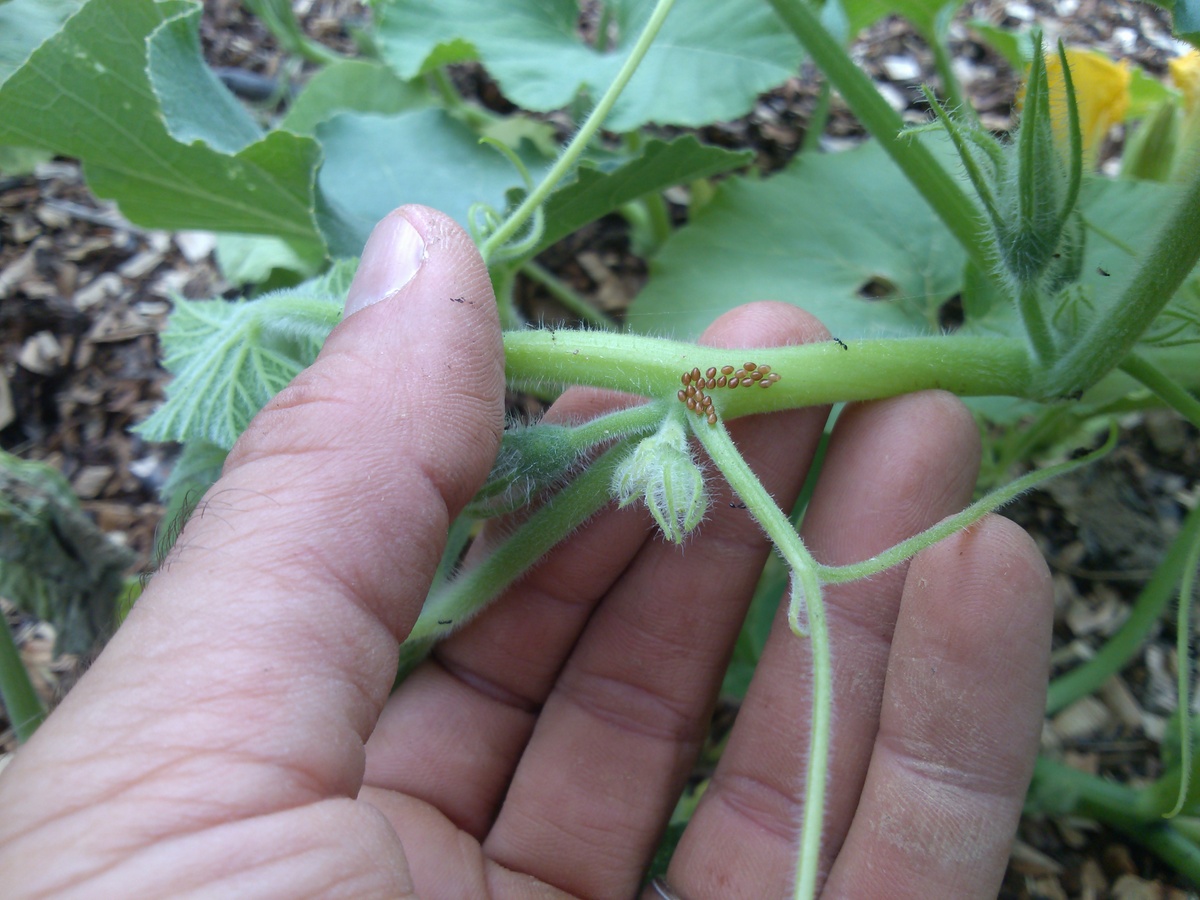
Around that time you should be checking the underside of leaves, where they lay their eggs, looking for the shiny orange eggs arranged in a neatly spaced pattern. Eggs can also be laid on stems as well, so don’t neglect to search them as well.
What Do Squash Bugs Look Like?
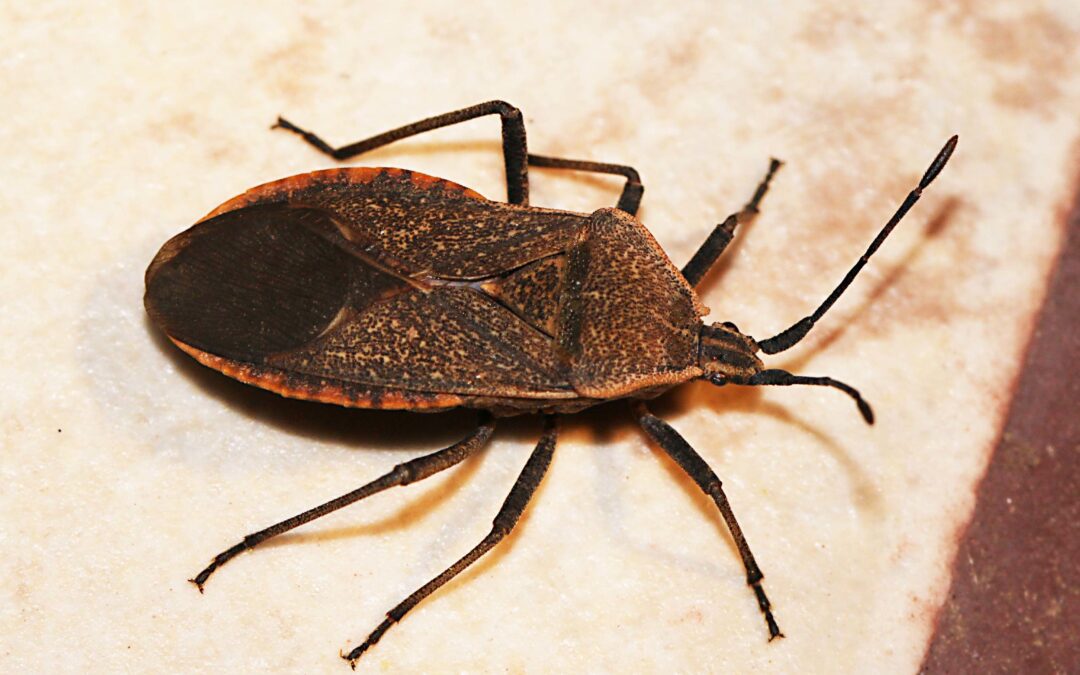
Squash bugs are easy to identify once you know what to look for. Adult squash bugs are typically about 0.5 inches long, with a flat, shield-like shape. They have a dark brown or grayish color, often with some orange or yellow markings on their bodies. The nymphs, or younger stages, are more colorful; they start off as bright green or orange and later turn a darker shade as they mature.
In addition, you might also notice the eggs laid by female squash bugs. These are usually found on the undersides of leaves and appear as small clusters of shiny black or brown eggs.
The Life Cycle of Squash Bugs
The life cycle of squash bugs consists of three main stages: egg, nymph, and adult. Here’s the typical timeline:
- Spring (April to June): Adult squash bugs emerge from overwintering sites and lay eggs.
- Late Spring to Early Summer (May to July): Eggs hatch, and nymphs feed on plants.
- Summer (June to August): Nymphs mature into adults, continuing to feed and reproduce.
- Late Summer to Fall (August to October): Adults persist until cooler weather signals the end of their life cycle. They will seek shelter for winter.
Egg Stage
Duration: Approximately 7 to 10 days
In spring, female squash bugs emerge from winter hiding spots and begin laying eggs. They typically lay their eggs in clusters on the undersides of leaves, where they are less visible to predators. Each cluster can contain 20 to 30 eggs, which are shiny and dark in color.
Once laid, the eggs will hatch within a week to ten days, depending on environmental conditions such as temperature and humidity. (Warmer temperatures can speed up the hatching process.)
Nymph Stage
Duration: Approximately 4 to 6 weeks
After hatching, the young squash bugs, known as nymphs, emerge. This stage lasts about four to six weeks and is characterized by several molts as the nymphs grow.
The first instar nymphs are small, bright green or orange insects. They are particularly vulnerable during this early stage as they search for sap to feed on. As they mature through subsequent molts, nymphs become larger and darker, eventually developing the characteristic shape of adult squash bugs. During this time, they continue to feed aggressively on the plant’s sap, which can lead to significant damage.
Throughout their nymph stage, squash bugs may experience several molts (typically five), shedding their exoskeletons as they grow larger.
Adult Stage
Duration: Adults can live for several months
Once the nymphs reach maturity, they transition into adults. Adult squash bugs are recognizable by their flat, shield-like bodies and dark coloration. This stage can last throughout the summer and into early fall. During this time, adult squash bugs are highly reproductive; each female can lay hundreds of eggs over her lifetime. This prolific breeding can lead to rapid population growth if not managed properly.
What are Signs & Symptoms of Squash Bug Damage in the Garden?
Presence of Squash Bugs
The most obvious sign of a squash bug infestation is the presence of the adults themselves. These pests are typically found resting on the leaves and stems of squash plants, especially during warm days. Look for their characteristic flat, shield-like shape and dark brown or grayish color. They group together in the garden too.
If you notice small, bright green or orange insects on your plants, you may be looking at squash bug nymphs. These younger stages are not as easily recognized as adults but can often be found near the base of the plant or on the undersides of leaves. They are generally more active than adults and can be seen moving around in search of sap to feed on.
Squash bug eggs are small and shiny, usually appearing in clusters on the undersides of leaves. Each cluster can contain anywhere from 20 to 30 eggs, making them quite noticeable if you know where to look. They are often laid in a row, resembling small black or brown specks.
Wilting & Yellow Leaves, Mold Growth
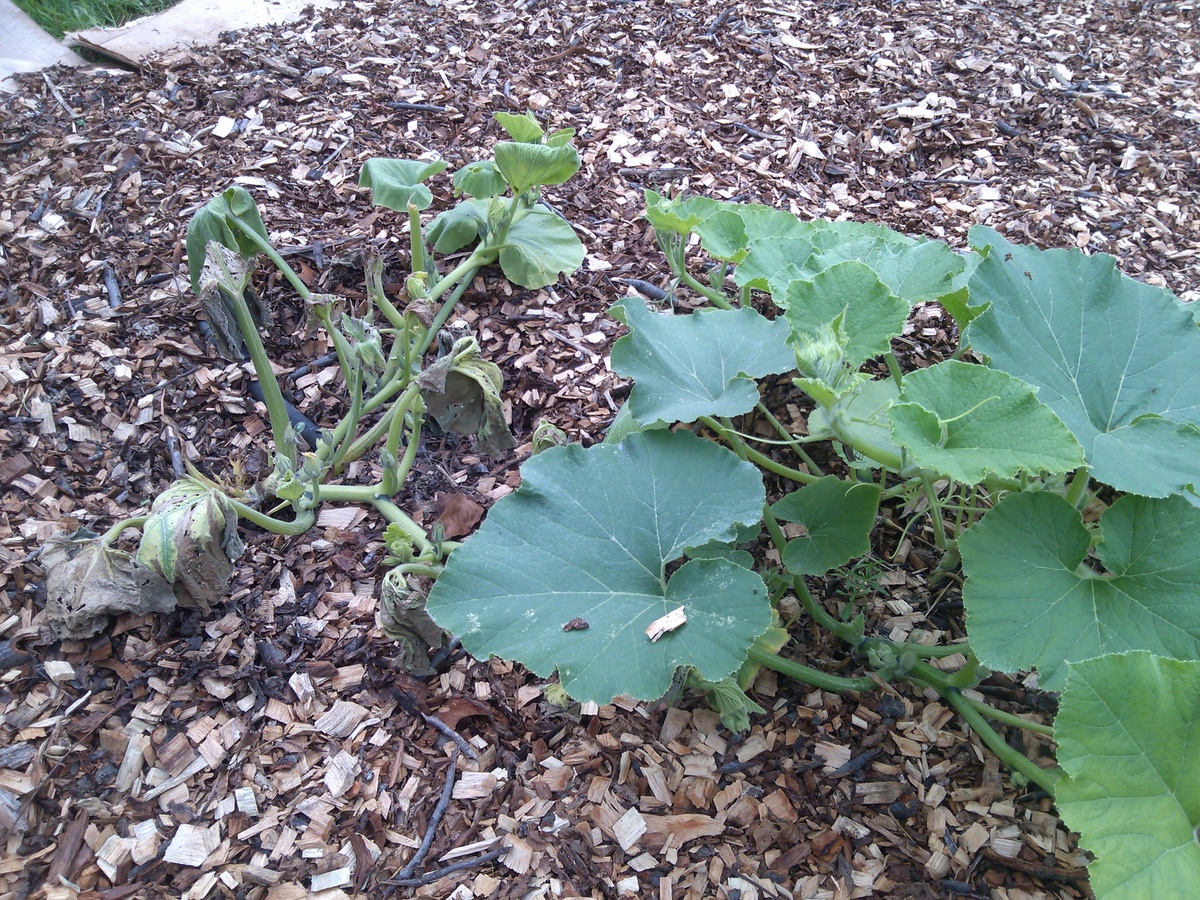
If you neglect to look for eggs and they hatch, you will usually first notice wilting leaves as the first sign of their activity, which is caused by them sucking the sap out of the plant – both the adults and nymphs do this – there are just a lot more nymphs, so they can cause a lot of damage quickly.
Squash bugs are piercing-sucking insects, which means they use specialized mouthparts to puncture plant tissues and feed on the sap. This feeding behavior directly affects the plant’s ability to transport nutrients and water, leading to a range of damage that can threaten the plant’s overall health. Squash bug feeding often results in yellowing leaves, particularly starting from the base of the plant.
One of the most immediate signs of squash bug damage is wilting leaves. As these pests suck sap from the plant, it loses vital fluids, causing leaves to droop and curl. This wilting can occur suddenly, especially on hot days when plants are already under stress.
In addition, squash bugs excrete honeydew while feeding. This sticky substance can attract other pests and lead to sooty mold growth on leaves. The mold appears as black spots and can cover leaves, inhibiting photosynthesis and further reducing plant vigor.
Other Plant Signs of Squash Bugs
Plants heavily infested with squash bugs may experience stunted growth. As these pests drain essential nutrients and water, the plants struggle to develop properly. You may notice that your squash plants appear smaller than healthy neighbors or fail to reach their expected height and size.
Squash bugs can significantly impact fruit production as well. Infested plants may produce fewer flowers, which leads to lower yields. Even if some fruit does develop, it may be smaller or less flavorful due to the stress placed on the plant by continuous feeding.
Preventing & Controlling Squash Bugs in the Garden
To minimize the impact of squash bugs in your garden, consider implementing a few preventive & control measures:
Crop Rotation
One of the most effective ways to prevent squash bugs is through crop rotation. By changing the location of your squash plants each year, you disrupt the life cycle of the pests. Squash bugs tend to overwinter in garden debris and soil near their host plants, so moving your crops to a different area can help reduce their populations.
Use Physical Barriers
Physical barriers can be an excellent line of defense against squash bugs. Consider using:
- Row Covers: Lightweight fabric row covers can protect young plants from adult squash bugs while allowing sunlight and moisture to penetrate. Be sure to secure the edges so that pests cannot get underneath.
- Netting: In addition to row covers, using fine mesh netting can help keep squash bugs away from your plants, especially during their early growth stages.

Handpicking Squash Bugs & Eggs
One of the most straightforward methods of controlling squash bugs is handpicking. It is important that you find and kill any adults and nymphs that you find, to eliminate the egg-laying threat. You can kill both by squishing them between your fingers. The nymphs are fairly soft, but the adult’s shell is tougher, so it may take some pressure before they pop.
You can also remove the eggs from the underside of the leaves. There are two methods of egg removal: squishing them by with your fingers, and removing them with duct tape. While I’ve used the finger-squishing method, when you’ve got a chance to use duct tape, why wouldn’t you?! 🙂 To use duct tape, unroll a length of tape and roll it around your fingers inside out, so the sticky part is facing out and it sticks to itself.
Start your search for eggs on leaves and stems, and carefully roll the tape across any group of eggs you find. It may take a couple of passes, but you should be able to remove them fairly quickly.
While you would ideally be checking daily in June and July for eggs, you can probably be safe with a search every second or third day. If you don’t, you may turn over a squash leaf one day to find something like this:
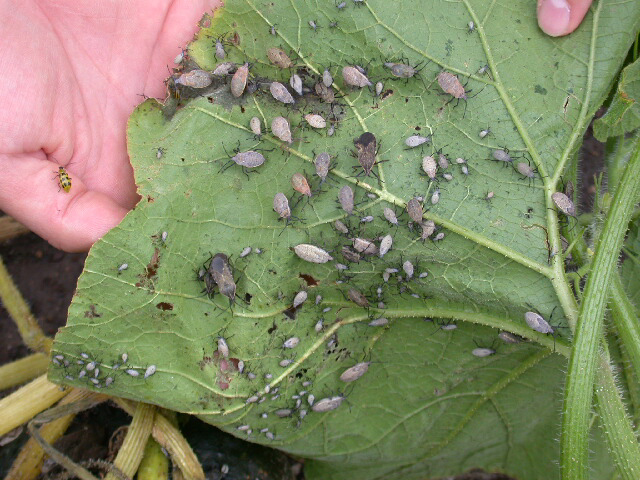
Not Good.
Early detection and elimination of eggs is the key to controlling squash bugs and to reducing the chance that you’ll lose much of your crop to these common pests.
If you want to reduce the amount of hand picking and squishing you have to do, you can combine this manual method with an organic spray for bugs with exoskeletons. I’ve found good results in terms of deterrence and reduction of squash bug population using the organic bug spray I detailed in an earlier blog post.
Neem Oil
Neem oil, derived from the seeds of the neem tree, is an effective organic pesticide that interferes with the life cycle of squash bugs (and many other garden pests too). Mix neem oil with water according to the product instructions and spray it on affected plants. Be sure to coat both the tops and undersides of leaves. Apply neem oil in the early morning or late afternoon to avoid harming beneficial insects and to maximize effectiveness.
Diatomaceous Earth
Diatomaceous earth (DE) is a fine powder made from fossilized algae that can help control squash bugs. When sprinkled on plants and around the garden, DE damages the exoskeletons of insects, leading to dehydration and death. Lightly dust DE on the leaves of your squash plants and the surrounding soil. Reapply after rain or watering to maintain effectiveness.
Encourage Natural Predators
Creating a welcoming environment for beneficial insects can help keep squash bug populations in check. Natural predators like ladybugs, lacewings, and certain birds feed on squash bugs and their eggs. You can attract these helpful creatures by planting a diverse array of flowers and herbs, such as marigolds, dill, and yarrow, which provide nectar and habitat for these beneficial insects. (More on this in a moment.)
Maintain Garden Hygiene
Keeping your garden clean is another important step in preventing squash bugs. Clear away any dead plant material, fallen leaves, and other debris where squash bugs may hide during the winter months. At the end of the growing season, remove all leftover plant material to eliminate potential overwintering sites for squash bugs. Building healthy soil also makes for healthier plants which are more likely to fight back attacks from bugs.

Using Crop Rotation, Companion Planting, Trap Crops, & Beneficial Insects for Squash Bug Control
Crop Rotation
Crop rotation involves changing the location of your crops each growing season. This practice disrupts the life cycle of pests and diseases that thrive in specific plant families. To do this, you need to keep a record of where different crops are planted each year. For squash, move them to a new location away from previous years’ plantings.
Squash belongs to the Cucurbitaceae family. Rotate with plants from different families, such as legumes (e.g., beans and peas) or brassicas (e.g., broccoli and cabbage), which are less susceptible to squash bugs. By rotating your crops, you reduce the chances of squash bugs overwintering in the soil or debris near their food source. This practice can lead to more vibrant plants and better yields over time.
Companion Planting
Companion planting is the practice of growing different plants together in a way that benefits one or both species. Some plants can repel pests or enhance the growth of neighboring crops.
- Nasturtiums: These vibrant flowers can attract aphids away from your squash plants, allowing you to manage pest populations more effectively.
- Marigolds: Known for their pest-repelling qualities, marigolds can deter squash bugs and other harmful insects with their strong scent.
- Garlic and Onions: Both of these plants can help repel squash bugs due to their strong odors. Planting them near your squash may reduce pest pressure.
Companion planting creates a more diverse garden ecosystem, which can confuse pests and reduce their populations. Additionally, it promotes biodiversity, leading to healthier soil and plants.
Trap Crops
Trap crops are specific plants that are used to lure pests away from your main crops. By planting trap crops nearby, you can draw squash bugs away from your valuable squash plants. Zucchini or summer squash can be very effective trap crops.
Attract Beneficial Insects
Beneficial insects are natural predators or parasites that help control pest populations in your garden. Encouraging these insects can be an excellent way to manage squash bugs without relying on chemical interventions.
Key beneficial insects for squash bugs include:
- Ladybugs: These insects feed on aphids and other soft-bodied pests but will also consume squash bug eggs if they find them.
- Lacewings: The larvae of lacewings are voracious predators of various garden pests, including squash bugs and their nymphs.
- Parasitic Wasps: Certain species of parasitic wasps lay their eggs inside squash bug eggs or nymphs, effectively controlling their populations.
How to Deter & Eliminate Squash Bugs Conclusion
In conclusion, effectively managing squash bugs in your garden requires a combination of observation, prevention, and intervention strategies. By understanding their life cycle and identifying signs of infestation early, you can implement organic control methods and prevention. With these practices in place, you can enjoy a thriving garden free from the damaging effects of squash bugs…so you can actually harvest lots of squash instead of squash bugs this summer! 😉